Location: Tel Aviv, Israel
Type: Recreation space/ Hospitality
Size: 262 square meters
Status: Built, Completed in 2025
The goal of this project was to provide Tel Aviv’s nightlife a place that looks and feels different—a place of total escapism. This aligns with the Imperial Group’s vision of creating a space for play and enjoyment, featuring top-tier drinks, food, and music.
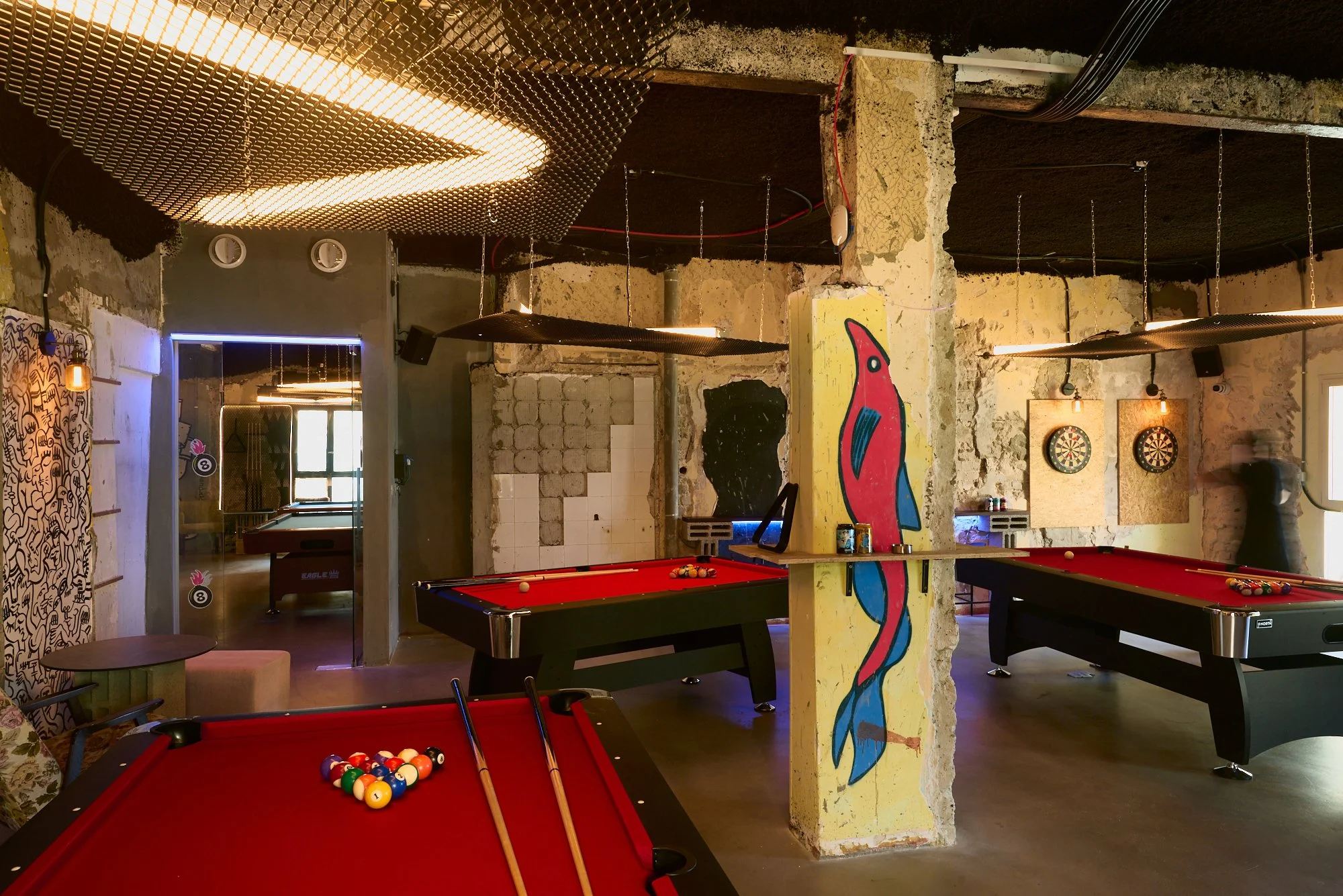
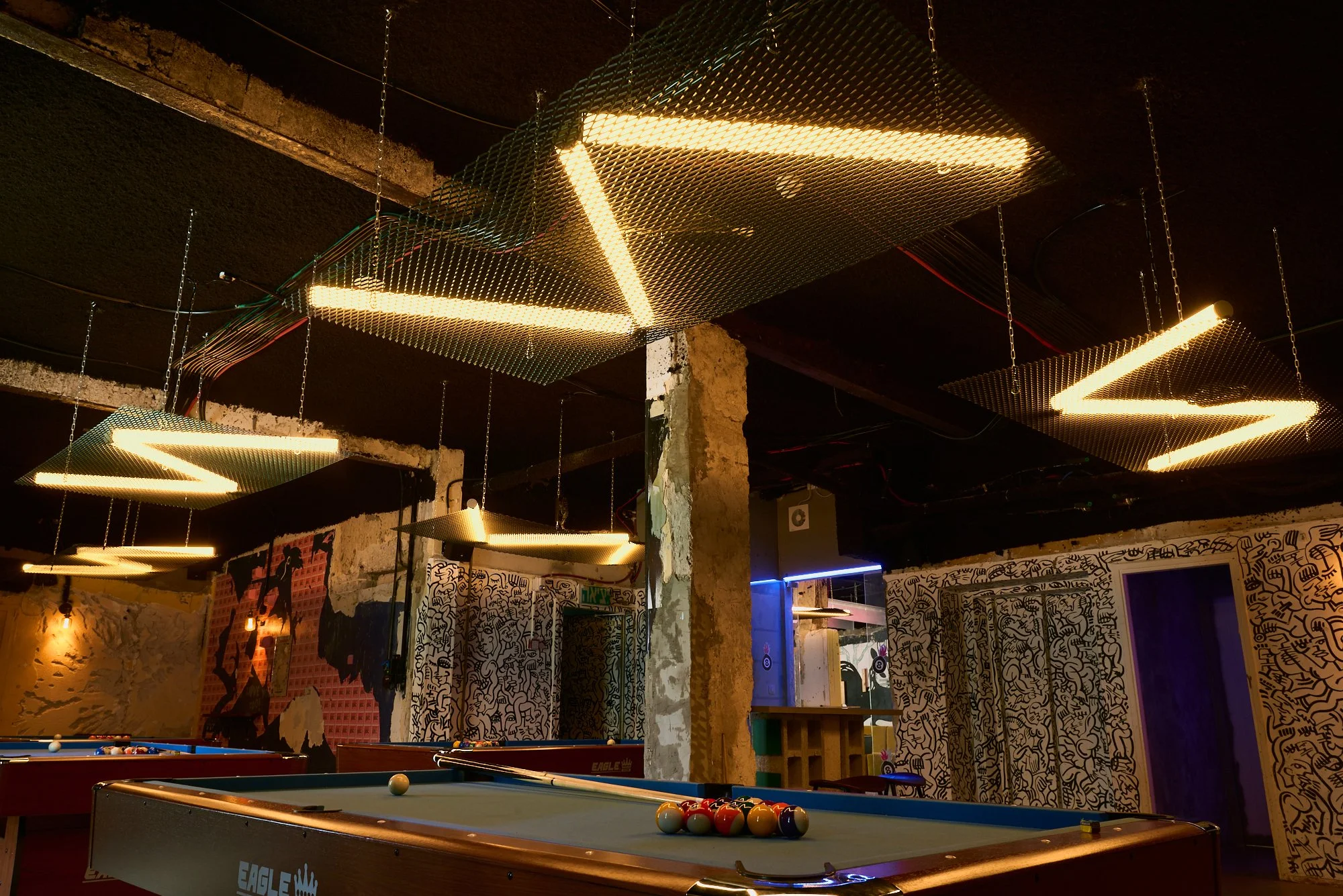
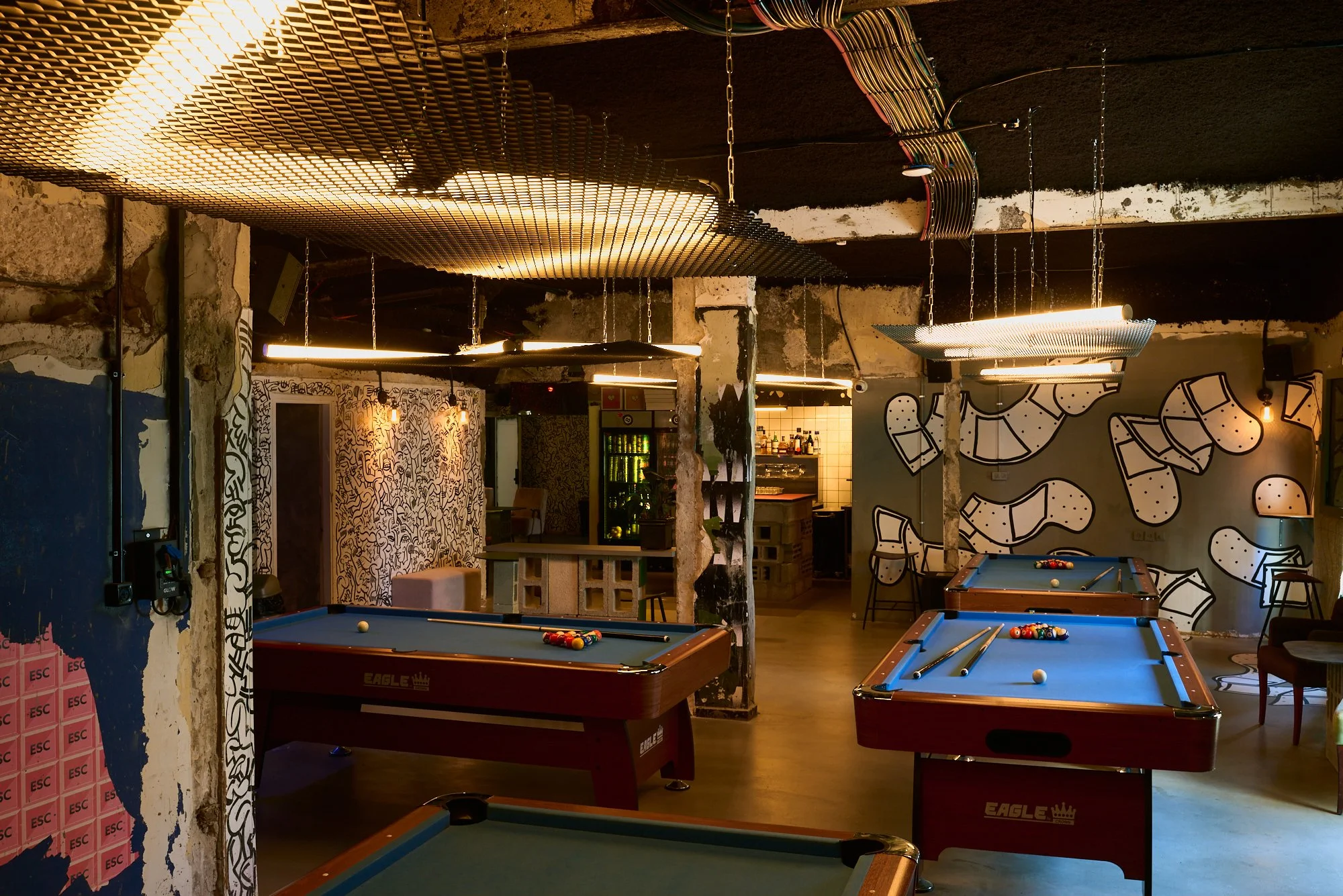
The story of the 8Ball begins with the history of the space itself. It was formerly used as hotel rooms, which were later transformed into galleries for the "Wonderland" contemporary art exhibitions. The design of the billiard club necessitated a fundamental change to the space's essence: transforming a collection of small, enclosed rooms connected by a main corridor into a large, open area suitable for its central function—playing billiards. This transition also provided an opportunity for a dialogue between old and new, which is expressed in the design's industrial-grungy character.
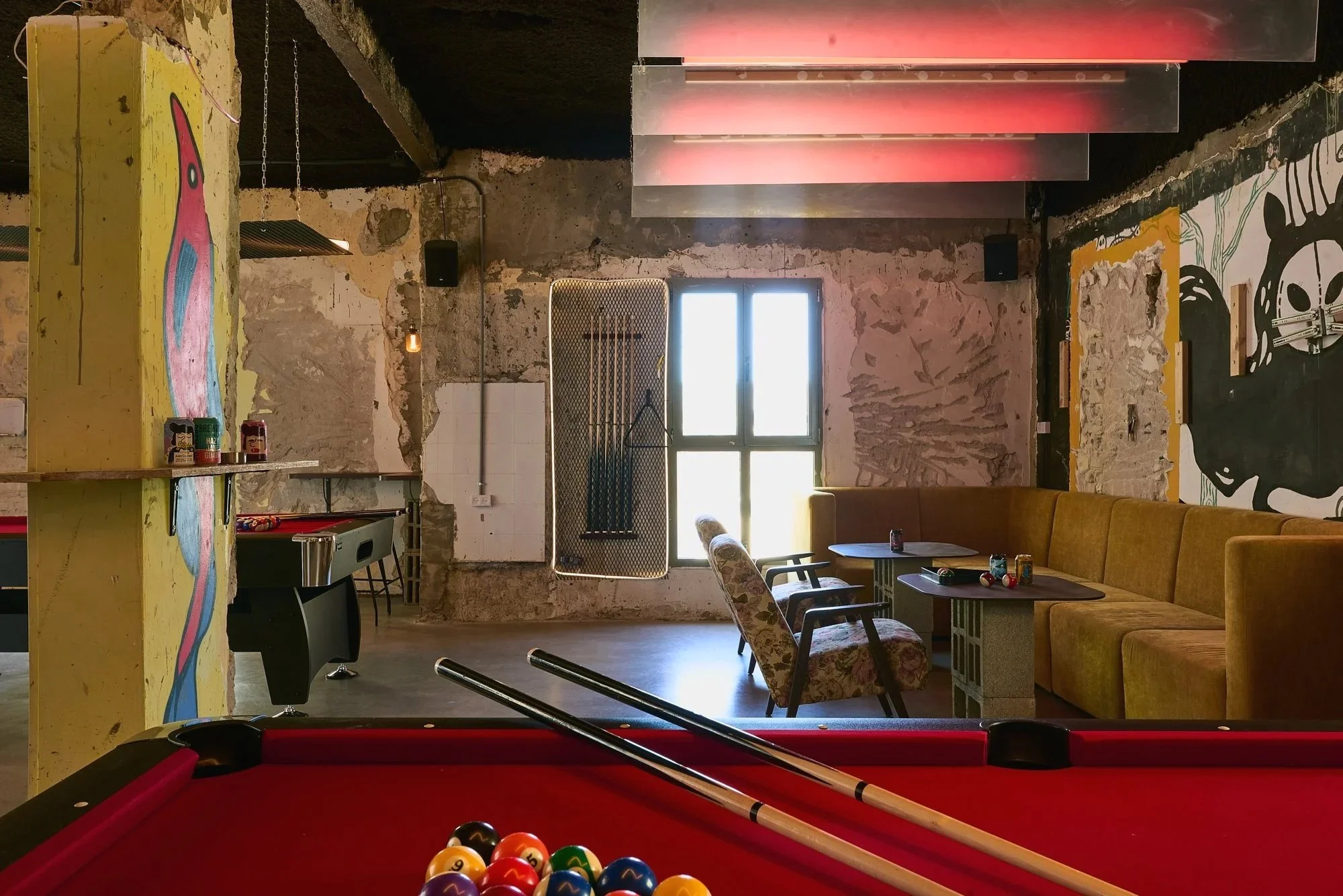
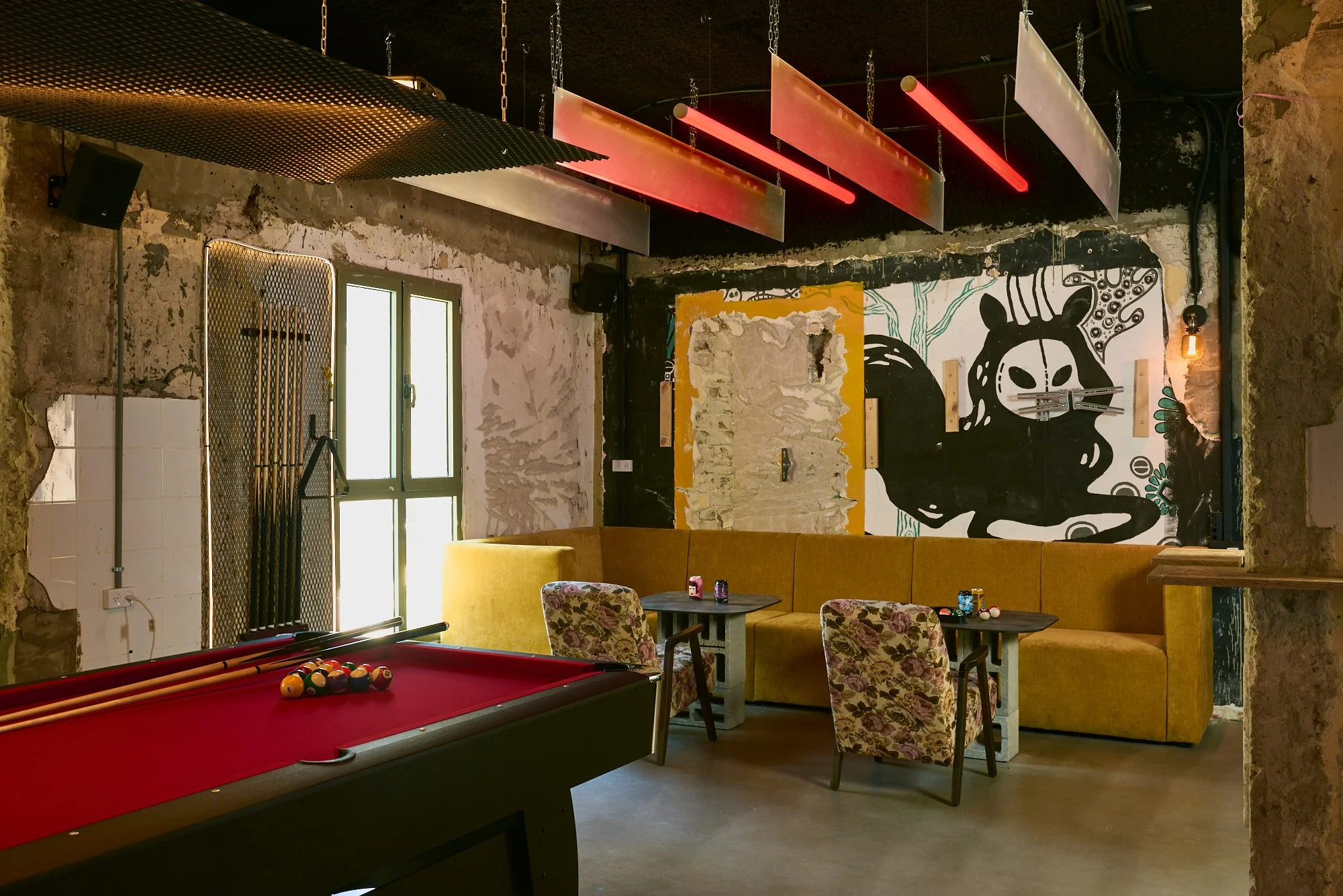
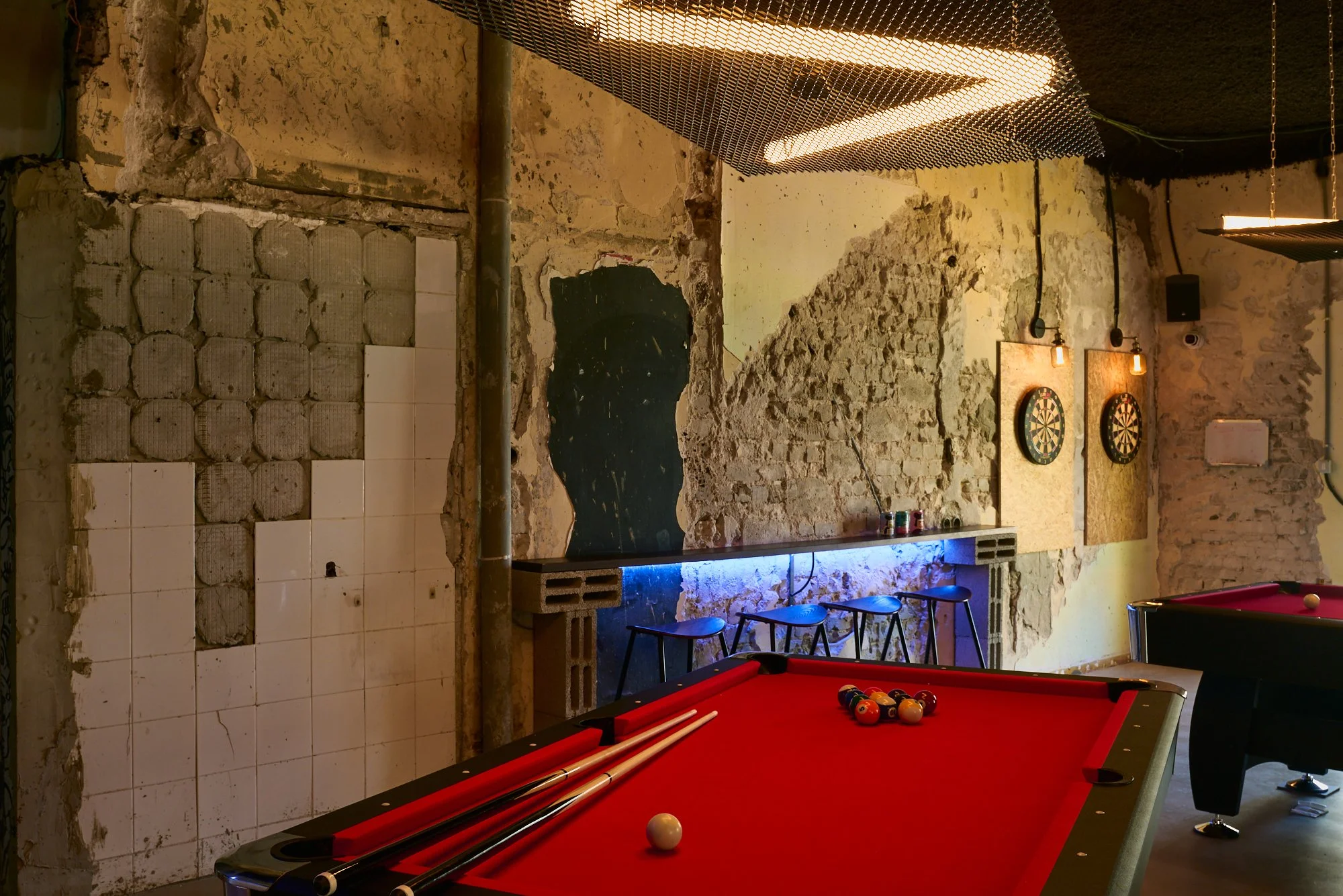
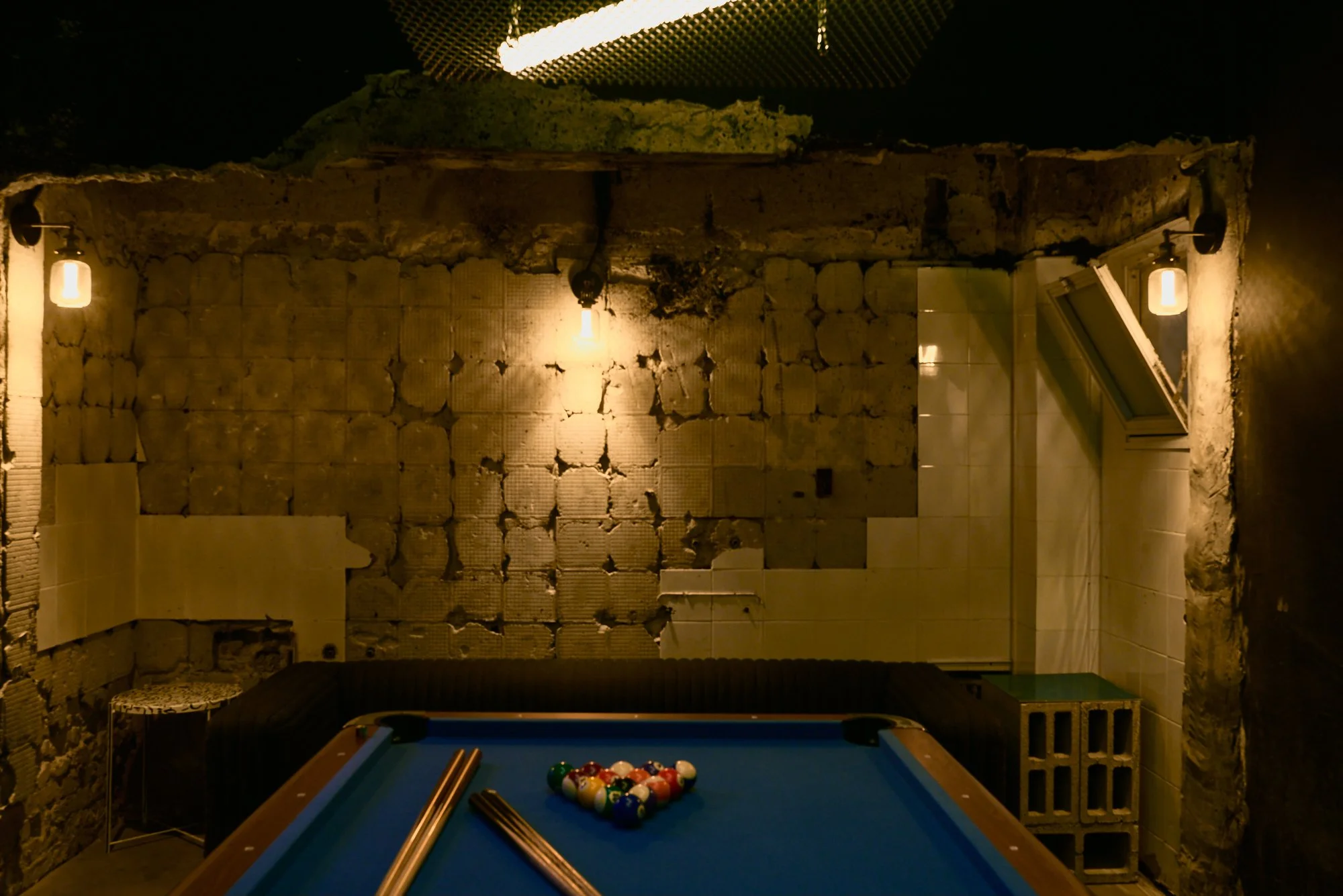
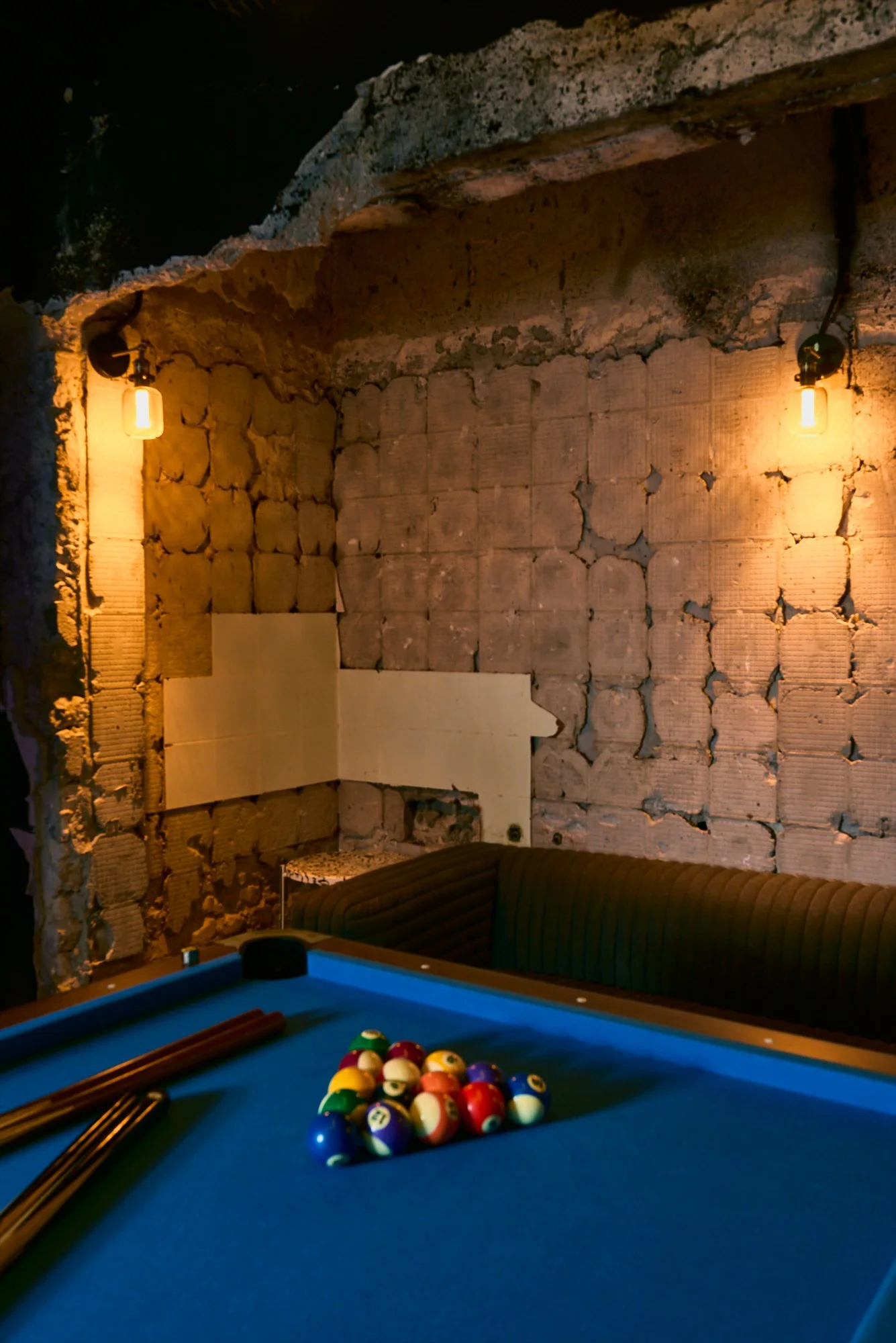
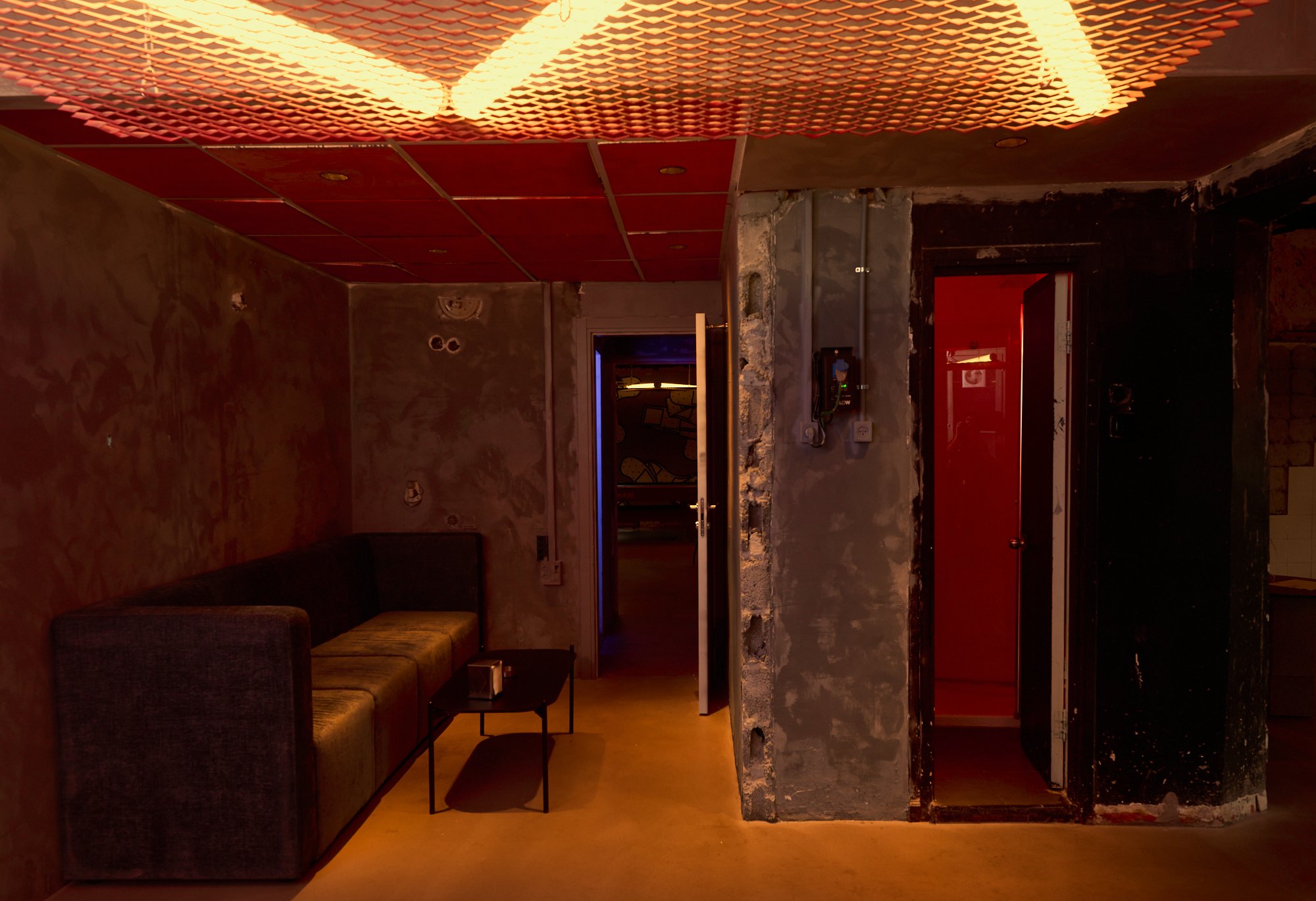
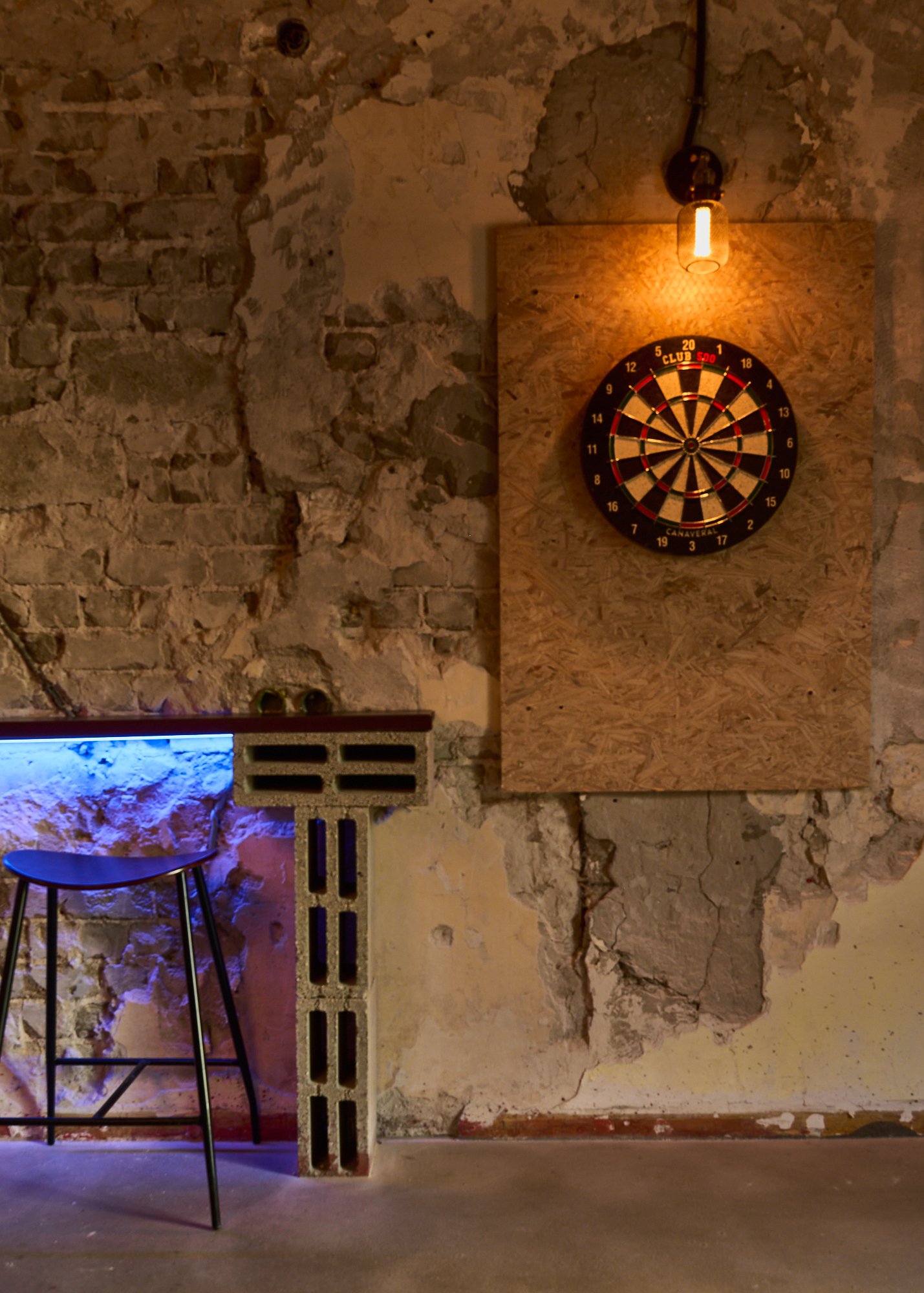
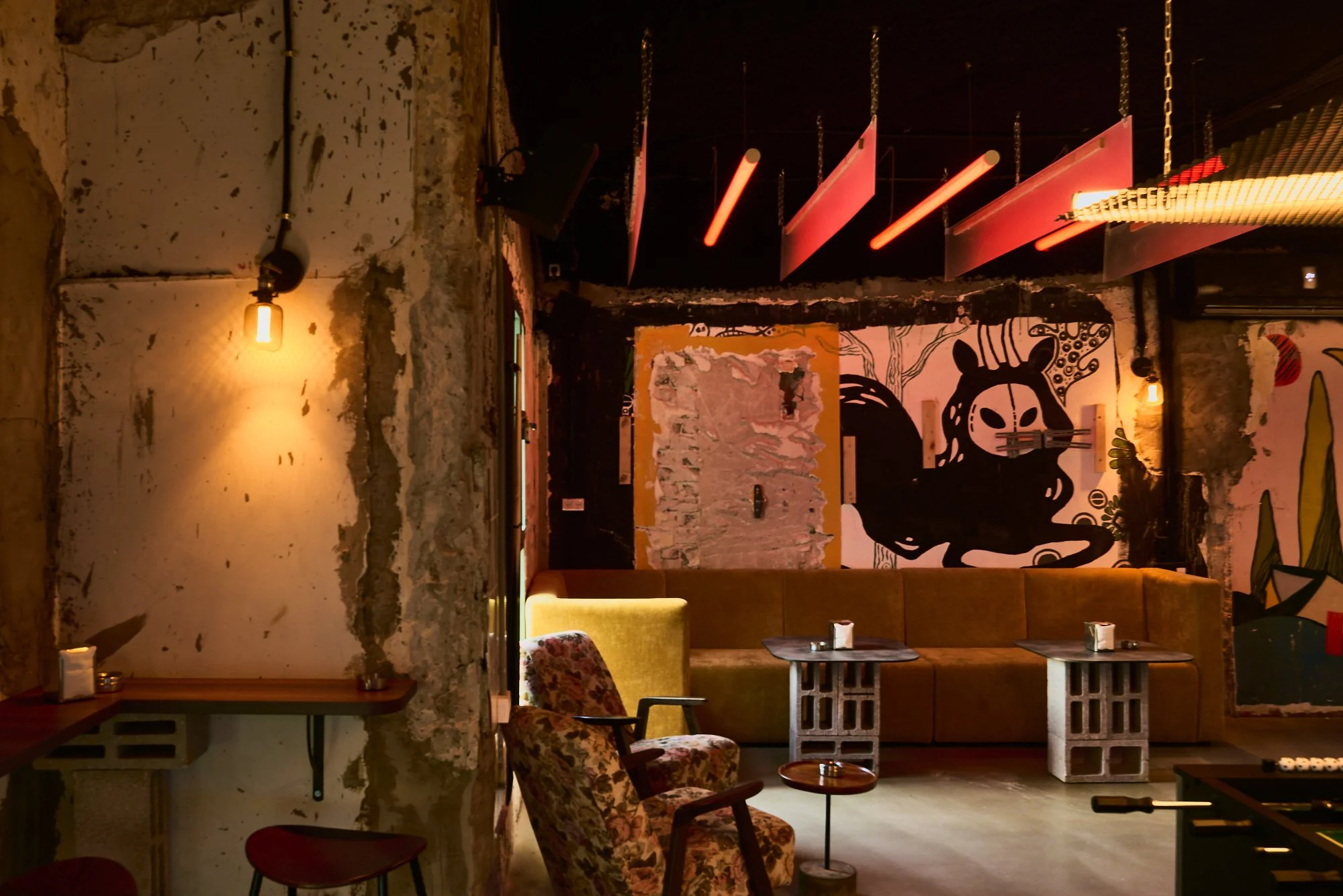
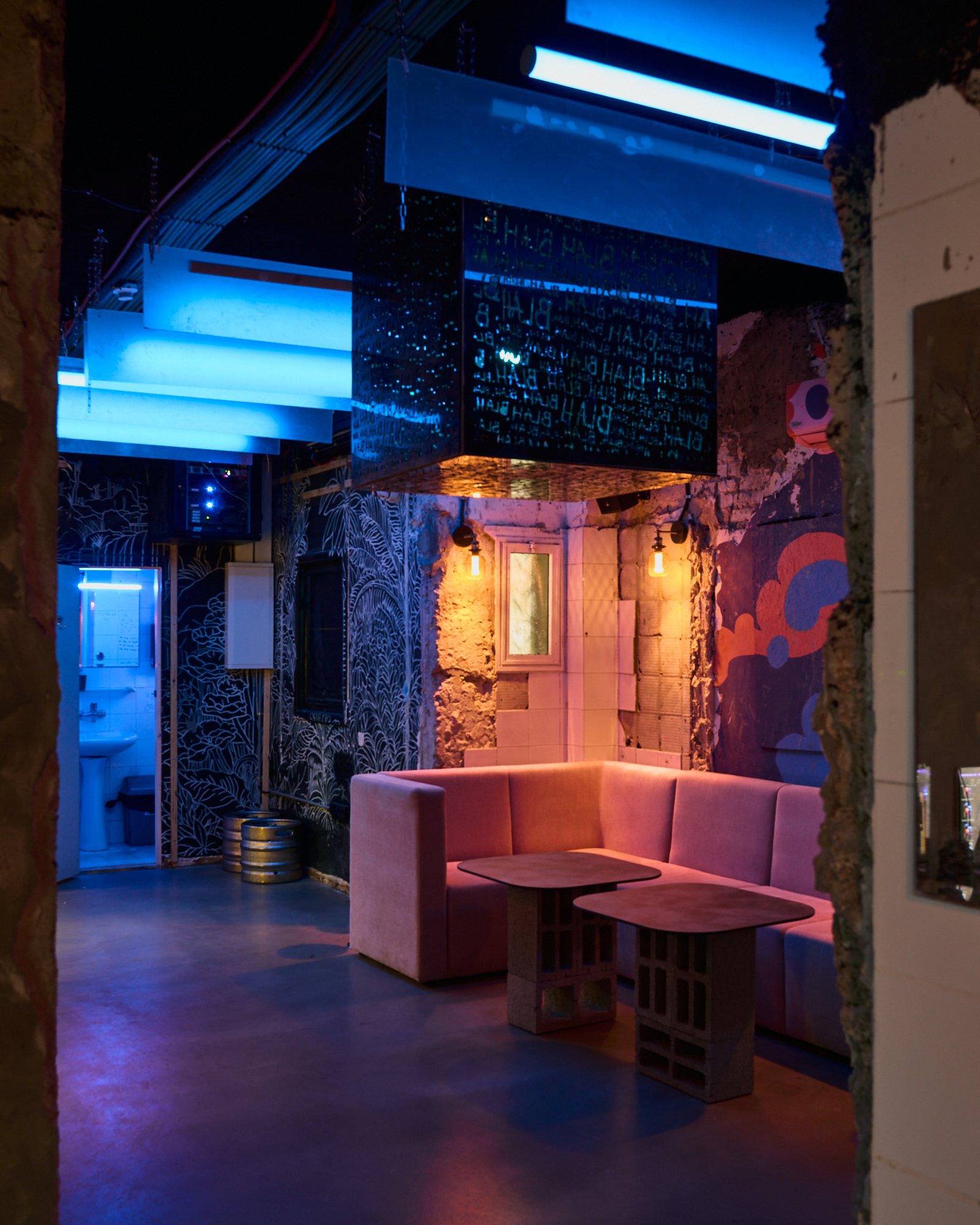
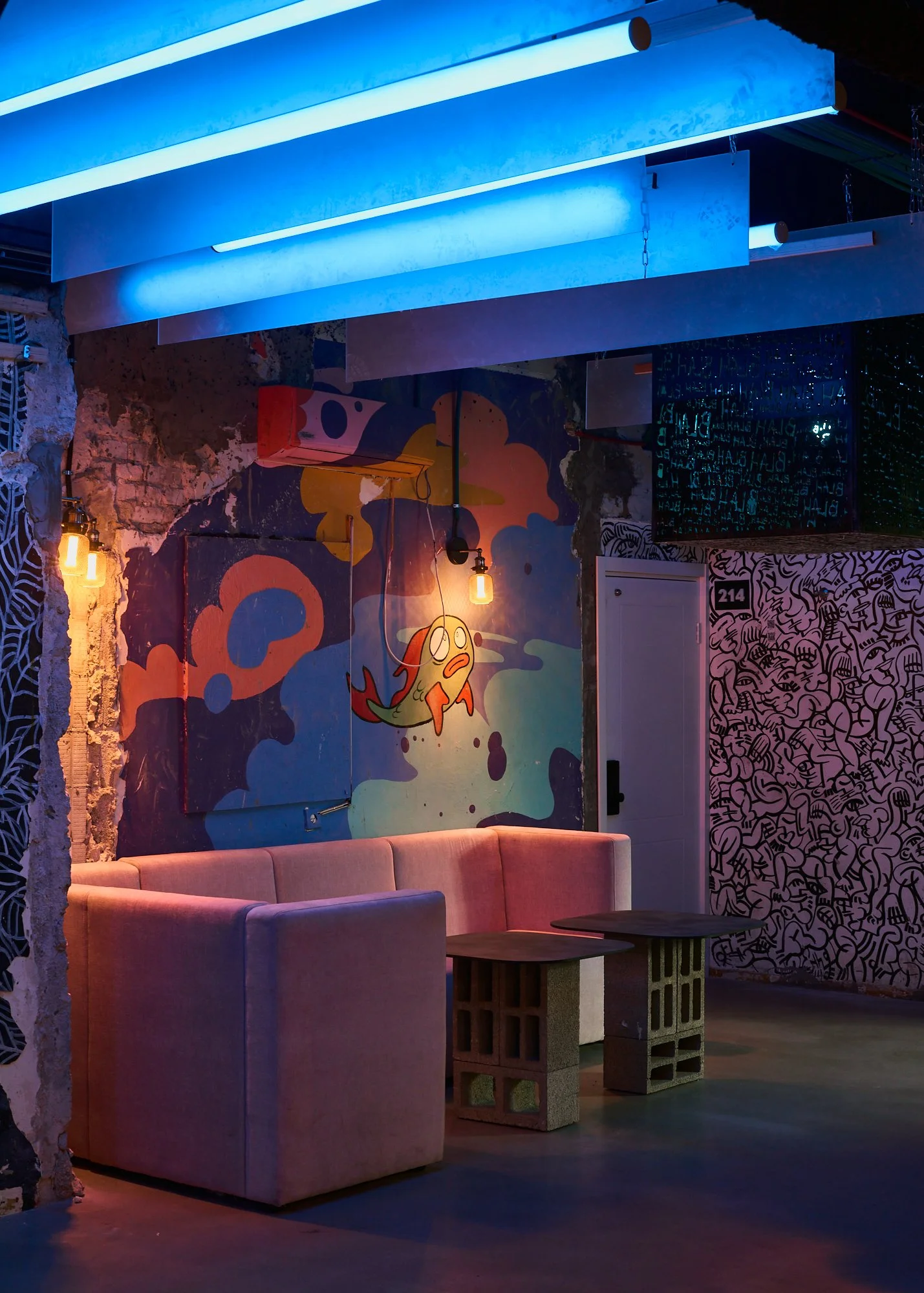
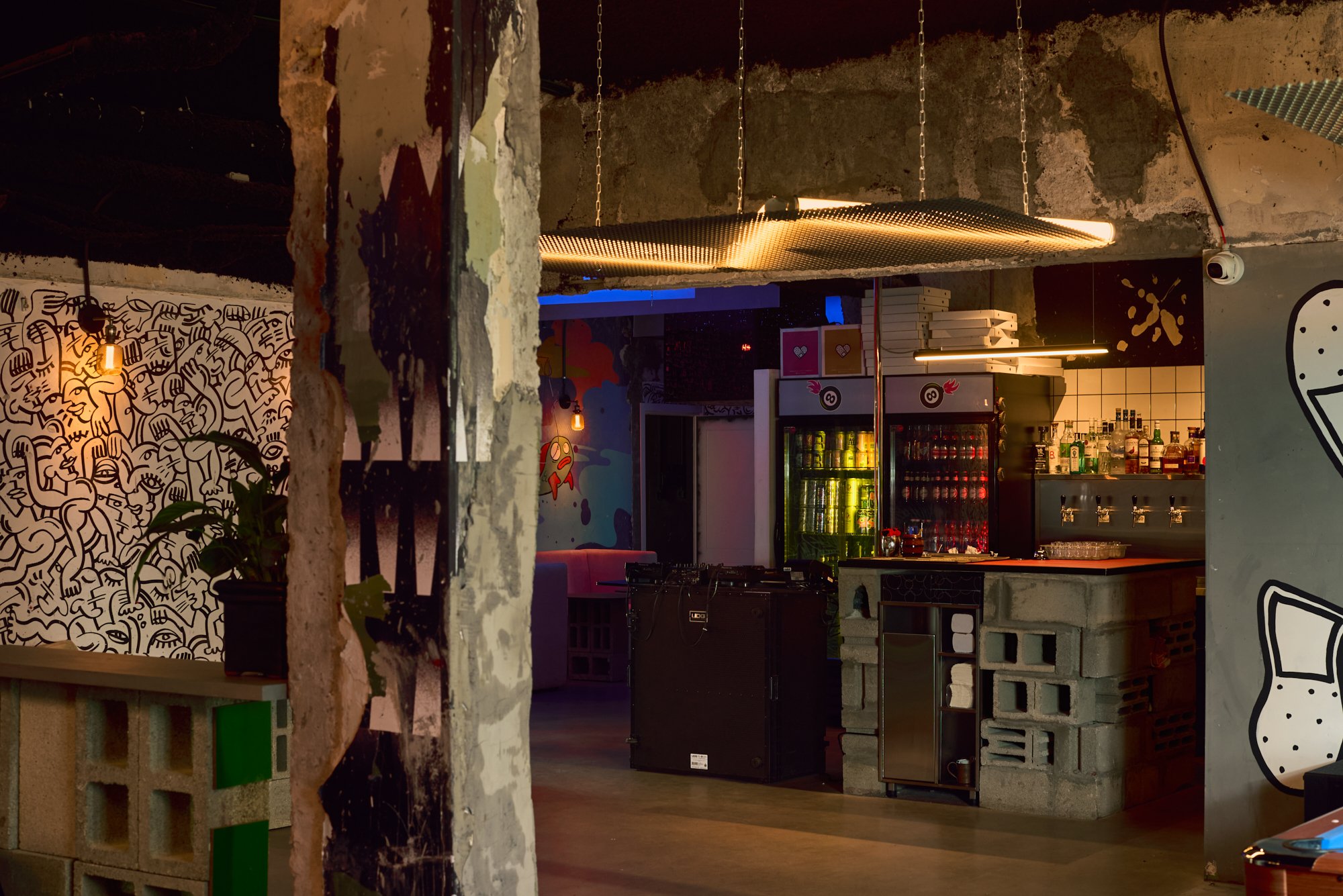
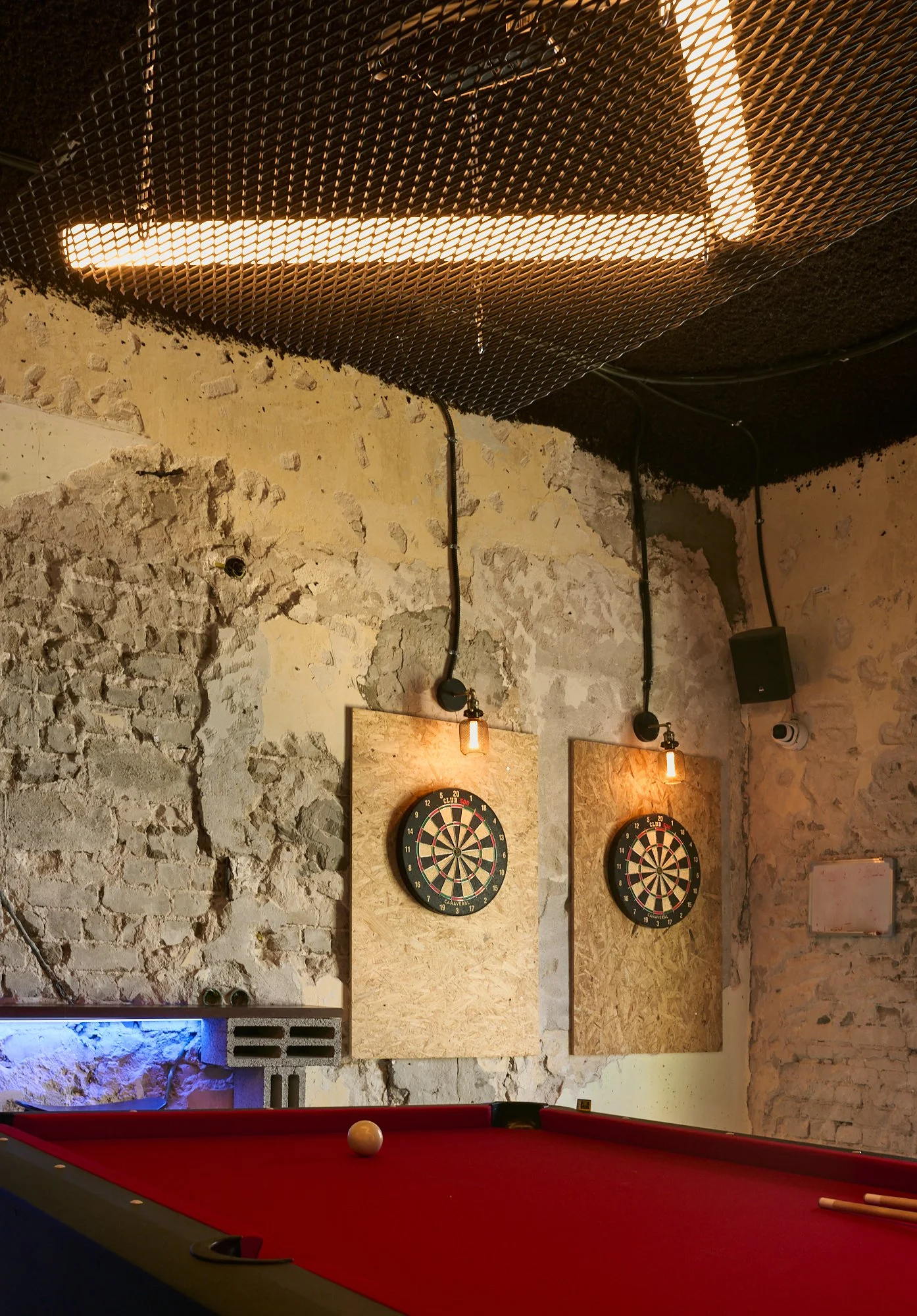
This industrial language and the connection between past and present are manifested in a collage effect. Art remnants from the exhibitions were left on the perimeter walls and existing construction, intentionally exposing the concrete and the hotel's existing infrastructure, such as the water and electrical systems. Three restrooms and other elements reminiscent of the original hotel rooms were left untouched, preserving a memory of the space as it once was and the artists who created within it.
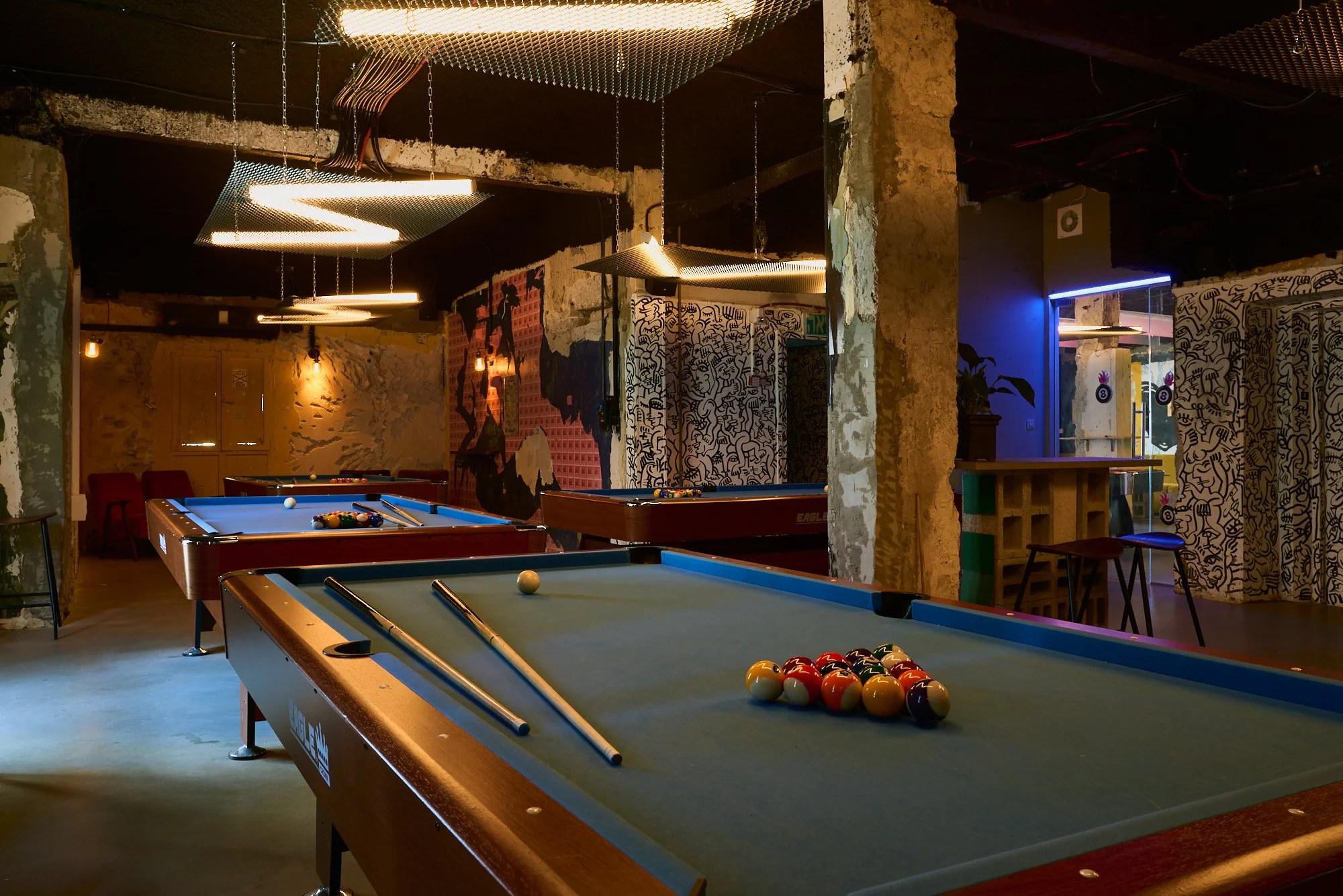
From the moment you enter the central space, the relationship between old and new is visible, yet the boundary between them is blurred and indistinct. The levelled concrete floor reinforces the existing concrete aesthetic, hinting at the base floor that was once covered in tiles.
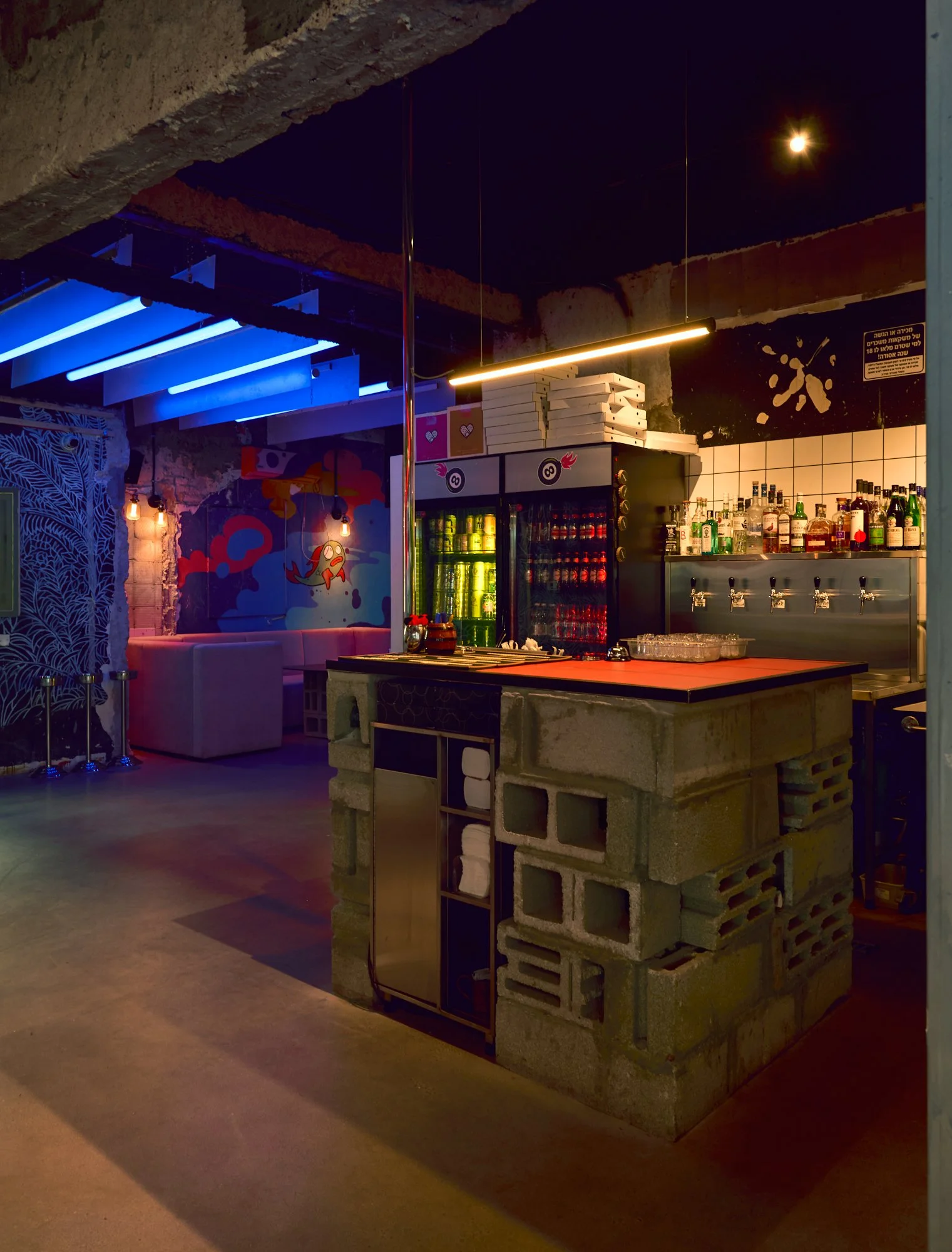
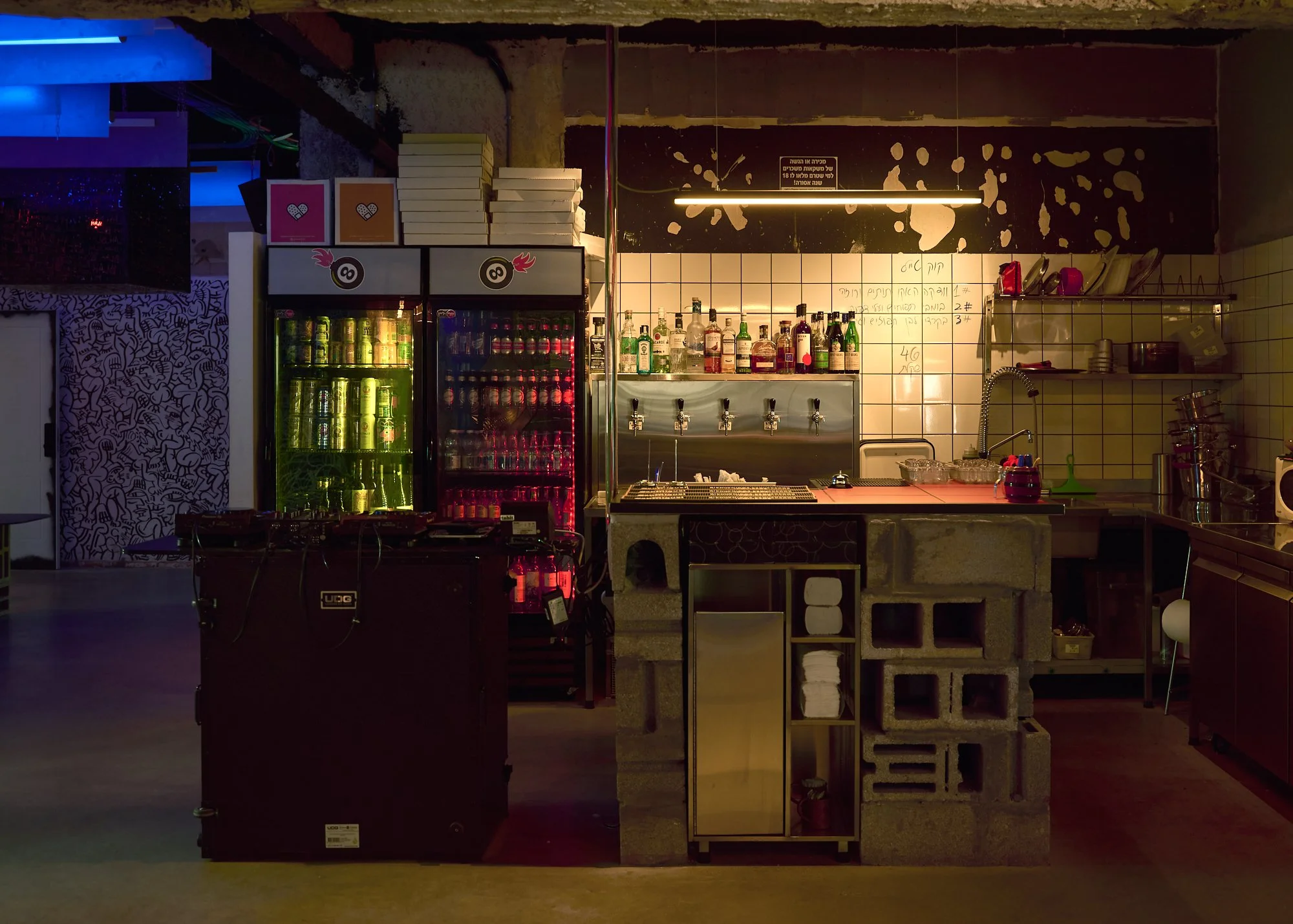
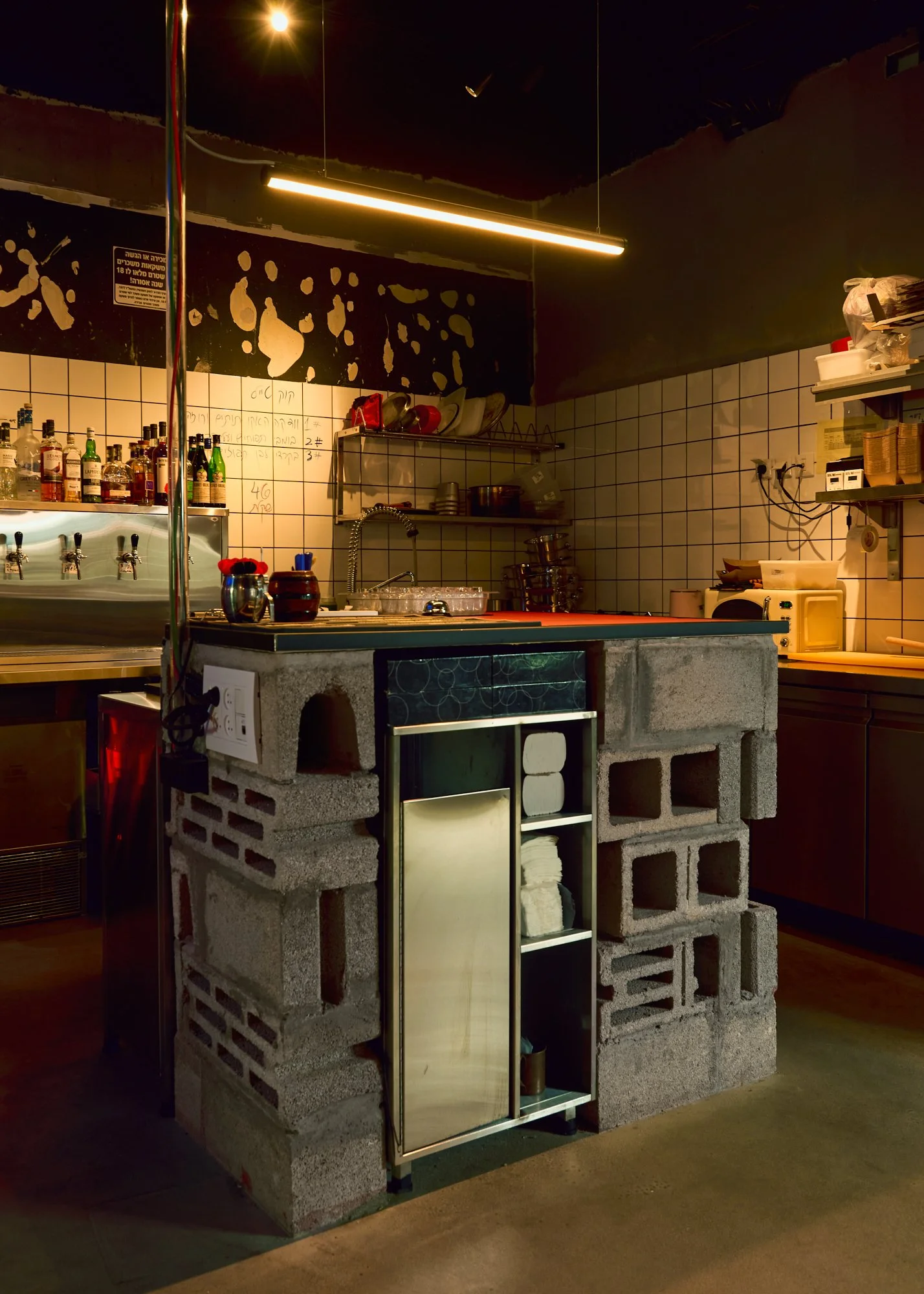
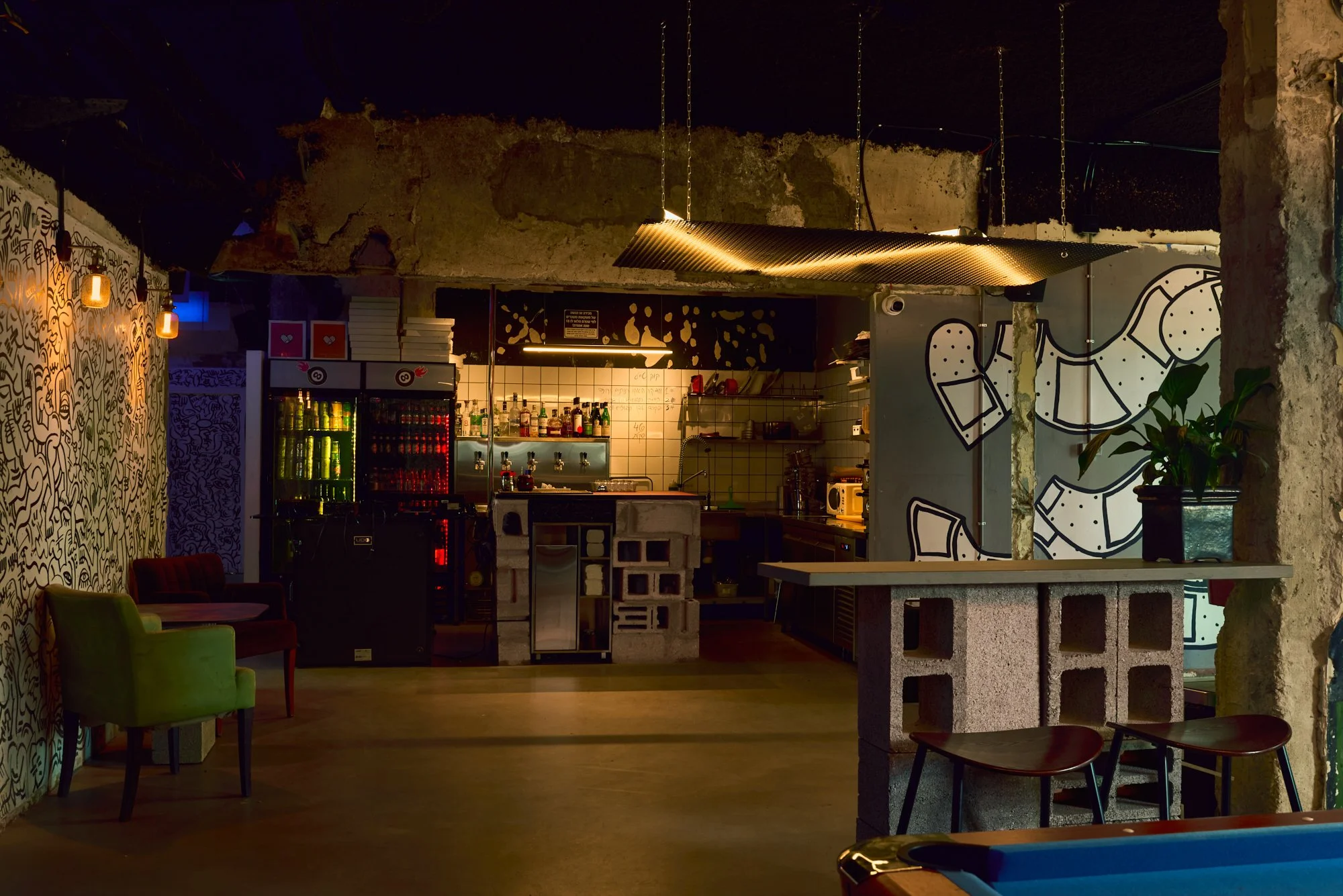
The bar is constructed as an island made of concrete blocks, assembled like a game of Tetris, combined with stainless steel and topped with red tiles. This creates an object in the space that speaks directly to the surrounding materiality of the exposed concrete and the remaining tiles on parts of the walls. The power supply to the bartender’s prep station on the island is exposed via a transparent pipe descending from the ceiling, communicating with the exposed electrical tracks in the ceiling that power the hotel rooms.
The lighting combines simple raw materials and utilizes elements from the past exhibition:
The lighting fixtures are built from industrial black-painted grates and simple linear light fixtures that allude to generic hotel corridor lighting. They are, however, positioned diagonally to create directional and dynamic lighting.
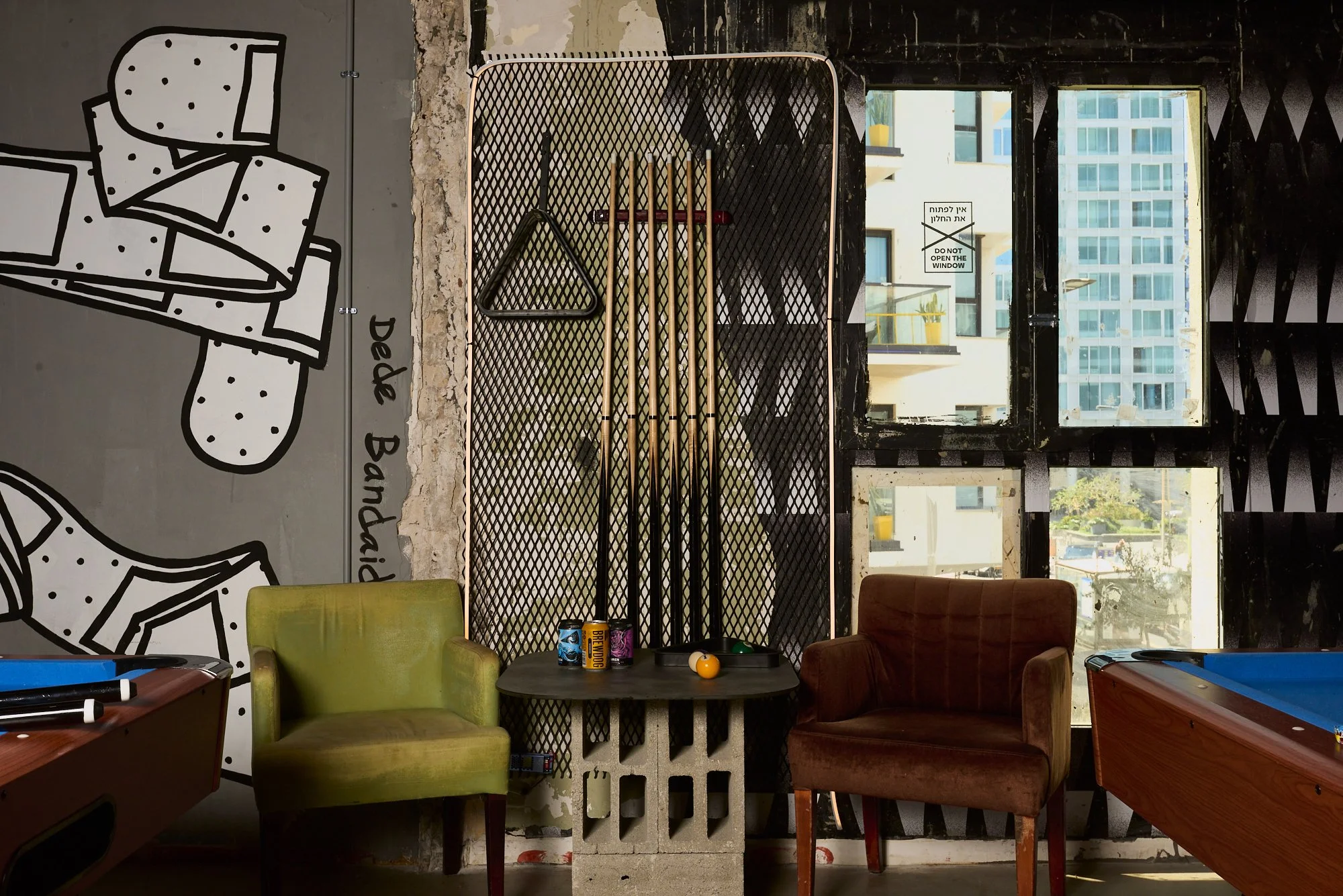
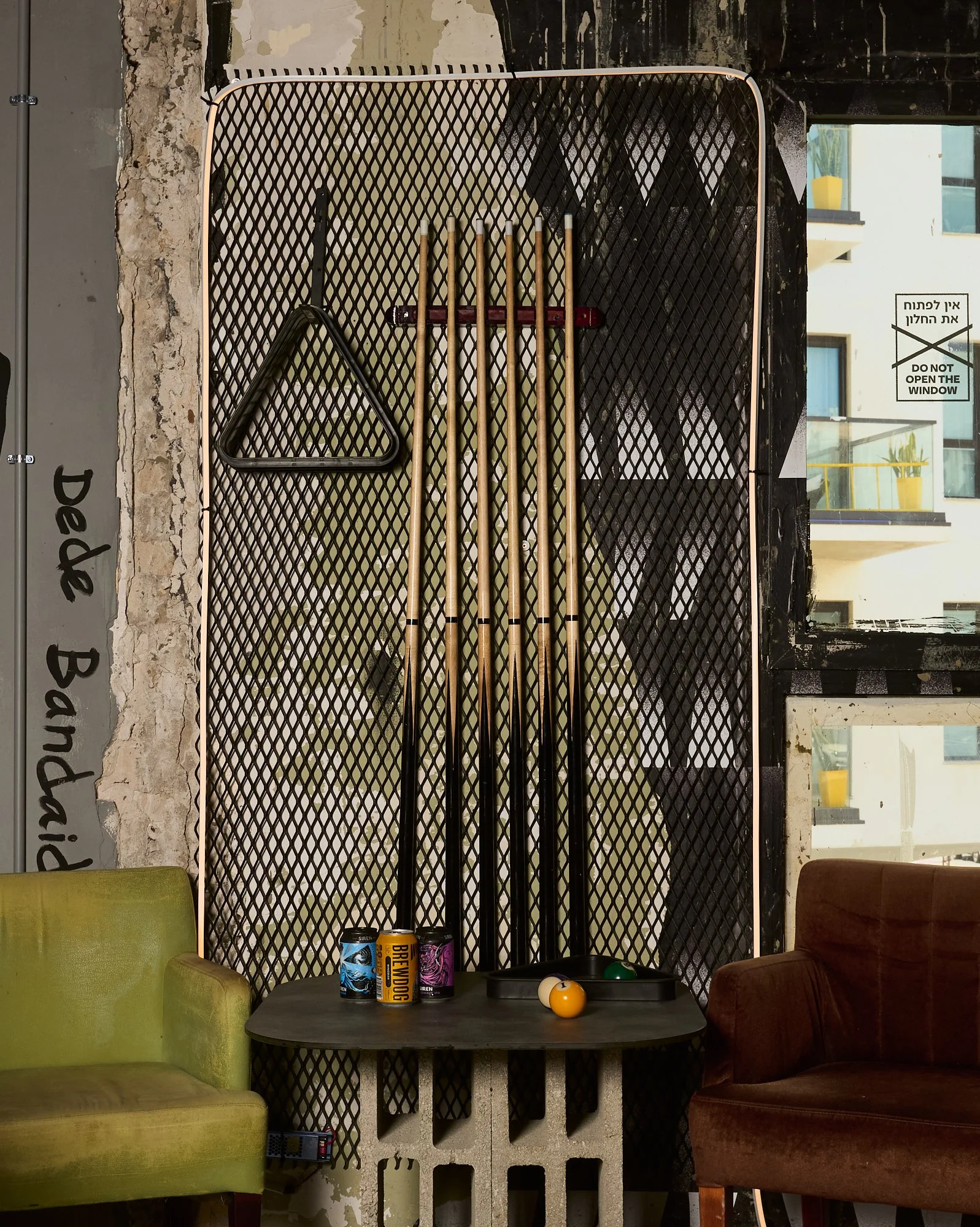
The grates appear again vertically on the walls between the billiard tables and are used for hanging game equipment.
The "Blah Blah" box from the exhibition remained, but its use changed, becoming part light fixture, part art.
Elements such as the sofas were also designed in shades matching the existing art in each space, alongside tables made of blocks and tops that reinforce the industrial language. Above each seating area, a linear lighting system was designed, combined with light-absorbing ceiling strips whose shades change according to the location of the seating areas in the different rooms.
The design as a whole, from space planning to lighting and furniture design, creates a dialogue and connection between the past and present while blurring the gaps in time. It allows all players and partygoers to experience a place that feels somewhere between Berlin and Bushwick in New York—a sense of disconnection and release in a venue that straddles the line between a club, a hotel, and art.
Photos by: Oz Barak Photographer